
14 min. read

Most factories still rely on legacy manufacturing systems that were never designed for integration. These systems operate with incompatible automation layers, outdated industrial software, and isolated operational data. Because of this, teams face system interoperability challenges and cannot align information across SCADA and MES. Even simple tasks demand manual work, since each system follows its own logic. This creates cross-layer communication failure and ongoing data gaps that slow every decision. As plants expand, the need for digital twin cross-system integration becomes sharper, because the existing architecture cannot scale on its own.
Moreover, legacy system integration issues accumulate over time. SCADA, MES, and ERP use different structures, which leads to broken data mapping and inconsistent machine data. Engineers must translate information from multiple sources, and this increases errors. Since the systems cannot communicate, the factory loses access to reliable production visibility. As a result, manufacturing data becomes fragmented, and tools cannot support analytics at scale. This environment limits growth because no shared foundation connects the enterprise and operations teams.
Data silos appear when disconnected plant systems store information without a shared model. In many factories, fragmented production data blocks enterprise-wide visibility and reduces trust in metrics. Because each layer tracks its own version of events, dashboards show incomplete operational insights. Furthermore, inconsistent machine data creates a structure mismatch that affects planning and reporting. Although teams want fast analytics, they cannot rely on numbers that change across systems. This lack of clarity slows important decisions and weakens performance.
Additionally, data silos impact digital programs that depend on aligned inputs. Predictive tools fail when they receive incompatible data streams, and MES visibility problems affect energy and performance models. Since SCADA and MES disconnect remains unresolved, enterprise data gaps grow over time. Maintenance teams cannot link process alarms to workflows, and analysts cannot validate trends. As the environment becomes more complex, unreliable factory dashboards reduce confidence in automation. Therefore, the organization loses agility and struggles to scale new initiatives.
Or read about what is CENTO and how it transforms enterprise operations into a unified digital twin, enabling energy consumption clarity, cost savings, sustainable growth and even more in our article.
Or read about what is CENTO and how it transforms enterprise operations into a unified digital twin, enabling energy consumption clarity, cost savings, sustainable growth and even more in our article.
Digital twin technology acts as the neutral integration layer that legacy systems lack. It builds a unified data layer for SCADA, MES, and ERP by standardizing signals and adding a semantic model. Because the twin mirrors real operations in real time, it provides a unified source of truth model that every system can access. This reduces cross-system interoperability issues and gives teams consistent operational context. As a result, companies overcome fragmented production data and gain reliable visibility across all layers.
Furthermore, the digital twin harmonizes industrial data from multiple generations of equipment. It transforms disconnected plant systems into a single, integrated environment without replacing legacy assets. Through cross-system data alignment, the twin eliminates structure gaps and allows teams to modernize workflows. It becomes a stable modernization pathway because it offers a clear interface for analytics, automation, and planning. Consequently, organizations move beyond outdated integration methods and gain the flexibility to scale digital transformation with confidence.
Digital twins unify the disconnected layers that exist within most factories. Instead of relying on fragile custom interfaces, the twin creates a stable unified data layer for SCADA, MES, ERP, and PLM. It normalizes fragmented production data, aligns inconsistent machine data, and removes incompatible automation layers. Because the twin collects inputs from sensors, PLCs, and legacy systems, it maintains one virtual model that reflects current plant behavior. This model gives teams a clear operational baseline without rewriting old software or restructuring existing workflows.
The digital twin acts as the central hub where all industrial signals converge. It absorbs legacy automation outputs, MES workflows, and planning data, then converts them into harmonized plant information. This shared structure eliminates the broken data mapping that prevents cross-layer visibility. Since every system reads the same context, SCADA and MES disconnect issues decline. As a result, the organization gains a dependable operational picture and avoids the instability caused by custom integrations. This shifts digital infrastructure away from brittle connectors and toward a robust integration core.
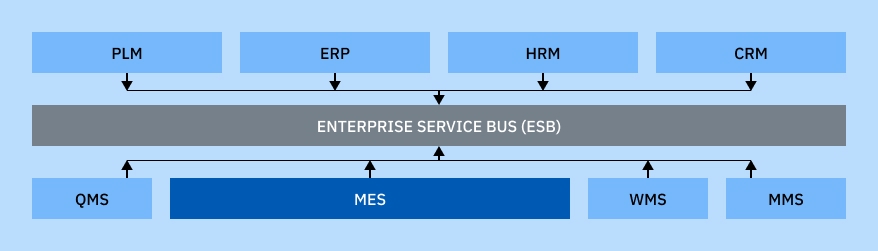
Traditional ESB-based architectures cannot solve cross-system data silos because they only move data without understanding meaning or context.
Digital twins also serve as the semantic bridge across operational and enterprise systems. They align real-time signals with business-level meaning, which removes enterprise data gaps and enhances decision accuracy. Each data point carries shared context, allowing SCADA, MES, and ERP to interpret information consistently. This improves analytics quality because inputs follow one semantic model. Engineers can trust the data flow, and managers gain a clearer understanding of factory performance. The result is a cohesive operational environment supported by reliable, structured information.
Semantic alignment also supports synchronized virtual-physical behavior. When the twin reflects equipment activity and workflow logic in real time, it enables cross-layer decision-making. Maintenance, planning, and scheduling systems can use the same unified source of truth rather than separate datasets. This strengthens operational resilience and reduces delays caused by manual interpretation. As the digital twin grows, it becomes more than a simulation tool. It functions as a core data infrastructure component that supports scalable modernization across the entire enterprise.
Unified data models eliminate legacy silos by replacing incompatible formats with one technology-agnostic structure. Digital twins rely on this structure to merge fragmented production data, inconsistent machine data, and outdated industrial software. When all inputs follow shared rules, SCADA, MES, and ERP interpret information without conflict. This removes system interoperability challenges and supports accurate analytics. A unified model also reduces integration overhead because teams no longer depend on custom connectors or manual mapping.
STEP (ISO 10303) provides a stable shared representation across PLM, CAD, and process data. Research shows that STEP aligns heterogeneous systems by offering one lifecycle model that both engineering and operations can trust. This reduces broken data mapping and resolves structure mismatch issues common in legacy manufacturing systems. Because STEP enforces consistency, companies gain uniform product definitions even when older tools remain in place. As a result, the digital twin receives clean, structured information and delivers a reliable view of the plant.
| System | Raw data the system produces | What the Digital Twin extracts | How the unified model normalizes it | Effect on cross-system integration |
|---|---|---|---|---|
| SCADA | Real-time signals, alarms, equipment states, process values, historian tags from PLC and sensors | Telemetry streams, time-series tags, alarm context, equipment behavior patterns | OPC UA normalization, semantic tag mapping, unified equipment state definitions | MES and ERP receive consistent live states for planning, scheduling, and reporting automation |
| PLCs | Low-level signals, setpoints, control commands, device-specific parameters | Clean time-series, control logic states, structured operational cycles | Standardized tag dictionary, lifecycle alignment, unified control-state taxonomy | Legacy controllers stop being isolated, becoming part of the unified operational picture |
| Sensors | Unfiltered process readings, environmental metrics, machine performance indicators | Contextualized measurements linked to asset models | Normalized units, semantic attributes, unified value ranges | High-quality inputs for analytics, anomaly detection, and simulation models |
| MES | Work orders, routing steps, production recipes, resource assignments, operator actions | Workflow structure, production context, execution timelines | Lifecycle-model alignment, semantic linking of steps with physical equipment | SCADA and ERP gain full visibility into work execution and real-time operational context |
| ERP | Orders, materials, inventory, financial data, planning horizons | Resource demand, material flow, cost structures, planning constraints | Unified resource model, normalized identifiers, shared business semantics | ERP plans sync with real operating states from MES and SCADA |
| PLM | CAD data, product structure, BOMs, engineering change orders | Lifecycle structure, product relationships, engineering constraints | STEP (ISO 10303) normalization, unified product definitions | Engineering, MES, and SCADA operate on one consistent product model |
| WMS | Inventory moves, material location, warehouse operations | Material status linked to production flow | Unified material identity and location semantics | MES and ERP receive consistent material availability signals |
| QMS | Inspection data, deviations, audit logs, compliance metrics | Quality indicators tied to assets and workflows | Standardized quality attributes and lifecycle alignment | Quality signals integrated into planning, maintenance, and reporting |
| CRM | Customer orders, requirements, delivery status, service history | Demand signals connected to production goals | Unified customer-to-production semantic mapping | Production aligns with real market demand using synchronized data |
OPC UA acts as the communication backbone for factories with mixed generations of equipment. Legacy controllers often use proprietary protocols, which creates isolated operational data and prevents unified visibility. OPC UA solves this by providing a secure standardized interface for SCADA, PLCs, and digital twin environments. Once telemetry flows through OPC UA, inconsistent machine data becomes easier to process and normalize. This reduces incompatible automation layers and helps teams maintain continuity during modernization.
With OPC UA in place, legacy assets no longer function as isolated systems. Their signals enter the unified data layer and follow the same semantic rules as modern equipment. This removes enterprise data gaps and gives engineers a complete view of machine behavior. Because OPC UA supports strong interoperability, SCADA and MES disconnect issues decline. The digital twin receives stable, structured information from all sources, improving accuracy and supporting higher-level applications such as scheduling, monitoring, and predictive analytics.
A semantic layer gives structure and meaning to raw tags from SCADA, MES, and legacy automation systems. It defines consistent relationships between machine states, workflows, and resources, which eliminates incomplete operational insights. When all systems share one vocabulary, engineers avoid interpretation errors and reduce dependency on manual translations. This clarity strengthens collaboration across departments and accelerates digital adoption. A semantic layer also helps the digital twin maintain a unified operational model that scales with the plant.
Ontology-based modeling enables consistent representation across heterogeneous manufacturing resources. It allows the digital twin to act as the dictionary for the entire factory, translating fragmented production data into coherent context. As a result, legacy systems, modern edge devices, and enterprise platforms all interpret information the same way. This reduces visibility gaps and supports reliable analytics. The unified semantic environment also improves resilience, since each decision draws from one trusted source of industrial meaning.
Digital twins create a unified source of truth by synchronizing data from SCADA, MES, ERP, and PLM within one operational model. They capture live machine behavior, workflow events, and planning structures, then merge them into a single industrial data model. This removes fragmented production data and prevents inconsistent machine data across systems. When every layer reads from the same model, teams gain a reliable and consistent operational view. The approach also reduces integration risks because no system needs custom mapping.
The unified model supports real-time decision-making because it reflects both physical activity and enterprise logic. Engineers see machine states with full context, while planners use accurate workflow and resource data. Since the digital twin aligns all inputs, SCADA MES ERP disconnect issues disappear. Legacy software also becomes more predictable because semantic alignment removes interpretation errors. As a result, the digital twin gives organizations one stable baseline for analysis, control, and continuous improvement across the entire plant.
A unified semantic model allows different systems to interpret data with the same meaning. It organizes raw tags, workflows, and product definitions into a shared vocabulary that spans legacy equipment and modern applications. Because every system uses the same semantic rules, incomplete operational insights become rare. This consistency is critical for accurate analytics and long-term scalability. The digital twin enforces this structure and updates it as the physical environment changes, keeping the entire plant aligned.
Studies show how dual-cloud architectures support this alignment. One cloud collects raw legacy and sensor data, while the second cloud maps it into standardized STEP structures. The digital twin then applies its semantic layer on top, creating a single operational truth. This architecture removes data silos and gives all systems identical context, regardless of age or vendor. By maintaining consistent meaning across layers, the digital twin becomes the central reference point for every operational and analytical workflow.
Legacy systems create long-term constraints because they follow different formats, protocols, and naming rules. A digital twin solves these issues by mapping legacy data into a canonical data model that remains stable across the plant. STEP and ontology structures eliminate incompatible formats and provide shared product definitions. OPC UA normalization removes protocol conflicts and lets older controllers publish interoperable signals. Engineers gain a predictable environment where inconsistent machine data no longer interrupts operations.
Digital twins also bring order to naming conventions and tag dictionaries. Legacy equipment often uses separate rule sets, which causes interpretation errors across SCADA, MES, and ERP. A unified information model resolves this by assigning shared meaning to all tags. This creates consistent context across layers and improves data quality. Because every system reads data the same way, visibility gaps close and cross-layer errors decline. The factory gains cleaner signals without replacing existing automation systems.

A digital twin enables analytics that older environments could not support. When data follows unified semantics, predictive tools work with accurate, context-rich industrial data instead of fragmented production data. This reduces noise and improves model performance. Maintenance teams can link equipment events to workflows, and planning tools receive complete operational context. The unified model provides a reliable foundation for AI, simulation, and optimization workloads.
The digital twin becomes a compatibility layer that supports every generation of hardware and software. Legacy systems continue functioning, but their outputs enter the unified data layer without modification. This lowers modernization costs and allows companies to scale advanced capabilities. SCADA MES ERP alignment becomes easier because the twin mirrors real-time behavior across all layers. As a result, organizations move from reactive operations to a stable, modernized environment guided by consistent, trusted data.
A unified data environment creates direct operational benefits across the entire plant. Digital twins deliver consistent operational data that supports DT-driven scheduling, cross-system analytics, and accurate anomaly detection. Teams work from one dataset, which improves coordination between maintenance, production, and planning. Quality indicators align with real machine behavior rather than disconnected historical reports. This gives leaders clearer insight into resource use, equipment health, and throughput performance. With unified data, decisions gain speed and reliability across all layers of the organization.
Unified data also enhances long-term efficiency by stabilizing analytics and automation. Energy and resource consumption models become more accurate when all inputs follow the same structure. MES systems adjust to live shop-floor conditions because the digital twin mirrors real equipment states. SCADA MES ERP alignment removes operational blind spots and reduces manual corrections. This creates a production environment where optimization becomes continuous and transparent. As a result, the enterprise gains measurable improvements in performance, cost control, and resilience.
Launch demo to explore CENTO features
or book a guided walkthrough
Digital twins offer the only scalable method to modernize legacy manufacturing systems without breaking existing workflows. They function as a semantic unifier, data normalizer, and behavioral mirror that connects SCADA, MES, ERP, and IIoT layers into one unified operational model. Because the twin maintains shared meaning and consistent structure, teams gain reliable insight into real-time conditions. This removes fragmented production data and eliminates the integration gaps that block modernization across aging environments.
The digital twin also acts as an integration hub that stabilizes decision-making across the enterprise. It provides context-rich industrial data that improves analytics, scheduling, and maintenance. Legacy devices no longer operate as isolated systems because their outputs enter the unified data layer. This creates predictable behavior across all applications and supports long-term scalability. As a result, companies transition from reactive operations to a modern, data-driven environment guided by trusted information.
CENTO converts digital-twin architecture into measurable improvements through a unified operational model that connects SCADA, MES, ERP, and legacy controllers. The platform includes a high-performance historian that captures clean, contextualized signals for analytics and reporting automation. This removes manual reporting work and gives teams instant access to consistent, plant-wide insights. Companies gain higher accuracy, clearer cost visibility, and faster operational decisions supported by reliable industrial data. To learn more about how CENTO help to gain cross-system integration book a guided walk-trough or launch a demo.
Digital twin cross-system integration is the process of unifying SCADA, MES, ERP, and legacy automation systems through one operational and semantic model. The digital twin synchronizes machine states, workflows, and resource data, creating a single source of truth that replaces fragmented interfaces and eliminates data silos across the plant.
A digital twin removes data silos by normalizing incompatible formats through OPC UA, STEP models, and semantic mapping. It aligns real-time equipment data with enterprise workflows, ensuring that SCADA, MES, and ERP consume consistent information. This unified structure eliminates interpretation errors and enables reliable analytics and reporting automation.
A digital twin can connect SCADA systems, PLCs, sensors, MES platforms, ERP suites, PLM databases, and warehouse or quality management tools. It provides one integration layer where legacy controllers and modern cloud systems exchange data using shared semantics, enabling true cross-system interoperability without replacing existing equipment.
A unified data model ensures that every system interprets information the same way. It resolves naming conflicts, standardizes equipment states, and aligns engineering, production, and planning data. This shared structure improves decision accuracy, reduces integration complexity, and allows predictive analytics and automation to work reliably across disconnected environments.
A digital twin improves real-time decision-making by synchronizing live equipment signals with workflow, resource, and product data. It provides contextualized insights that eliminate blind spots between SCADA, MES, and ERP. Teams gain an accurate operational picture, enabling faster responses, fewer errors, and better alignment between production goals and actual plant behavior.
Share your details and let’s start the conversation.
Share your details and let’s start the conversation.
Launch demo to discover some of product features.
Login: demo
Password: demo
If you need more information and guided demo – contact our team to book a call.
Explore CENTO in a live demo environment and see how the platform works in practice.
Login: demo
Password: demo
Want a closer look? Contact our team for a guided walkthrough.