
12 min. read

An enterprise digital twin in manufacturing is becoming a core enabler of real time visibility, energy intelligence, and operational resilience. Modern plants face constant variability in load, process conditions, and equipment behavior, which traditional simulation cannot capture. Simulation supports early design decisions, but it operates on fixed assumptions that drift as machines wear or production changes. An enterprise digital twin closes this gap by using live operational data to mirror actual machine states. It reveals how processes evolve, how energy is consumed, and where inefficiencies emerge across the line. With this insight, manufacturers improve stability, reduce waste, and make faster decisions grounded in real performance rather than static models.
Or read about what is CENTO and how it transforms enterprise operations into a unified digital twin, enabling energy consumption clarity, cost savings, sustainable growth and even more in our article.
Or read about what is CENTO and how it transforms enterprise operations into a unified digital twin, enabling energy consumption clarity, cost savings, sustainable growth and even more in our article.
For many years, simulation helped manufacturers explore ideas and test production logic with static inputs. As factories became more dynamic, teams realized they needed models that evolve with the process instead of remaining fixed.
This shift led to the adoption of the enterprise digital twin, which captures real time behavior rather than assumed conditions. As machines change due to load, wear, or cycle drift, the twin updates instantly and offers a more accurate reflection of operational reality.
Manufacturers gradually moved from planning-focused simulation to operationally active models. The enterprise digital twin integrates SCADA, MES, and ERP data, allowing teams to monitor performance, validate adjustments, and maintain stability throughout daily production.
As energy costs increased and Industry 4.0 systems matured, the enterprise digital twin delivered insights simulation could not. It reads live load profiles, detects inefficiencies, and highlights where power is wasted. This evolution made the twin a core tool for optimizing energy use, improving reliability, and supporting continuous operational progress.
Manufacturers face increasing pressure to control energy use as equipment becomes more automated and production lines run at higher speeds. Teams need tools that reveal how loads shift during the day and why machines consume more power under certain conditions. The enterprise digital twin brings this clarity through continuous monitoring and contextual insight.
Modern energy challenges require more than periodic measurements or manual checks. Teams need real time visibility into the moment equipment behavior begins to drift. By combining sensor data with operational context, the enterprise digital twin highlights inefficient cycles, unstable configurations, and hidden drivers of power waste. This approach helps maintain predictable, efficient performance across busy factory floors.
Real time load monitoring: Tracks RPM, feed rate, airflow, and torque to identify energy-intensive anomalies and highlight root causes of waste.
Event and trend visibility: Uses alarms and Historian records to reveal repeating patterns and long term load deviations that increase power use.
Predictive maintenance insight: Detects early signs of wear, heat, or vibration drift that raise energy consumption before failures appear.
Quality-driven efficiency: Captures deviations in pressure, speed, temperature, and motion to prevent rework cycles that waste energy and material.
Dynamic line balancing: Analyzes flow, timing, and resource availability to reduce irregular machine cycles and avoid avoidable power spikes.
Smart scheduling decisions: Aligns production with tariff windows and load profiles, helping teams run energy-intensive steps when costs are lower.
Simulation continues to play an important role in manufacturing when teams need safe exploration, long-range planning, or early design validation. While an enterprise digital twin supports real time operations, simulation remains effective in situations where assumptions are acceptable and immediate accuracy is not required.
Long term capacity planning: Helps evaluate future layouts, demand shifts, and resource needs without affecting ongoing operations.
Early phase process design: Allows engineers to model workflows before installation and reduce design errors during prototype planning.
Testing extreme scenarios: Enables safe experimentation with failures, overloads, or unusual conditions that cannot be tested on live equipment.
Training and education: Provides a controlled environment for onboarding and skill-building before operators interact with real systems.
Manufacturers often begin with simulation because it offers a safe way to explore ideas, but operational demands eventually require real time accuracy. A shift to an enterprise digital twin becomes essential when teams must understand actual machine behavior, track load changes as they occur, and prevent energy waste before it appears. This transition usually happens when factories adopt Industry 4.0 practices and need continuous insight rather than static forecasts.
Real time energy costs make simulation insufficient, because tariffs, peak-load penalties, and unstable grids require instant visibility. An enterprise digital twin reads live signals, exposes spikes, and highlights where load behavior becomes inefficient. This helps teams maintain stable energy use and avoid unexpected costs that fixed-input models cannot predict.
Quality-driven rework, irregular machine cycles, and variable operating patterns also signal the need for a digital twin. These issues increase power use and disrupt production in ways simulation cannot detect or correct.
As factories modernize their operations, the enterprise digital twin becomes the central layer that unifies data from sensors, control systems, and enterprise platforms. This integration replaces isolated signals with a continuous operational picture that supports faster decisions, improved stability, and stronger energy insight. The components below show how the digital twin connects real time shop-floor activity with broader Industry 4.0 systems to keep planning and execution aligned.
Sensor data acquisition: Captures temperature, load, vibration, and energy use to form a real time foundation that reflects actual machine behavior.
Edge processing: Filters and stabilizes raw signals to reduce latency and deliver high-quality data before it reaches the enterprise digital twin.
SCADA signals: Provides machine states, alarms, and process parameters that allow the twin to interpret live operating conditions accurately.
MES context: Adds batch details, workflows, and quality records to help the twin understand production requirements and process deviations.
ERP master data: Supplies priorities, inventory levels, and resource plans to align operational decisions with enterprise objectives.
Feedback loop: Sends data-driven recommendations back to machines to support precise adjustments and continuous optimization across systems.
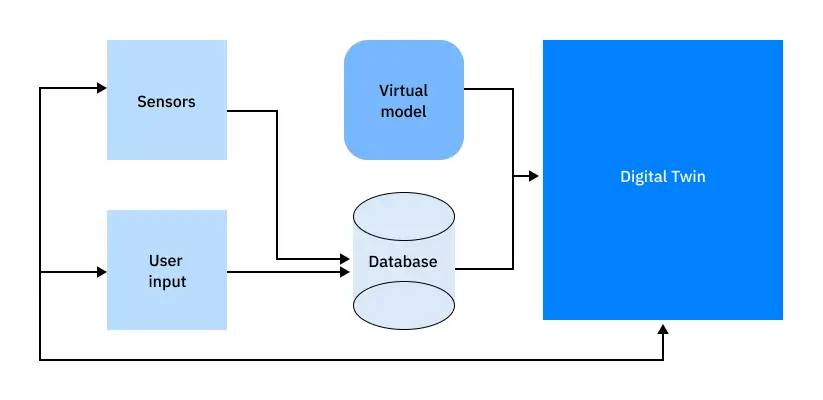
Sustainability metrics in manufacturing require real time accuracy, which simulation cannot offer. Simulation provides a static estimate of energy intensity, material flow, and projected downtime, but these values remain tied to fixed inputs. As production conditions shift, the model does not update itself, making sustainability insights less reliable for day to day decisions. This limits its usefulness when manufacturers track CO₂ emissions or evaluate resource efficiency targets under changing operational loads.
A digital twin delivers stronger sustainability performance because it reflects actual machine states and material movement. It captures live energy use, cycle drift, quality variation, and unplanned downtime, all of which influence carbon output. Real time data helps teams identify waste sources, stabilize processes, and optimize material flow with higher precision. The twin also supports accurate CO₂ tracking and energy benchmarking across production lines. This makes the digital twin vs simulation comparison clear when sustainability is a priority.
Scenario 1: You need to reduce power use on machining lines. A digital twin can read RPM, torque, and vibration in real time, then suggest more efficient cutting conditions before energy spikes appear. This helps teams keep the process stable and reduce peak demand without slowing output.
Scenario 2: You need to cut waste in an assembly system. A digital twin can interpret inline quality signals, spot early deviations, and offer adjustments before rework builds up. This lowers unnecessary machine cycles and keeps overall energy use more consistent across stations.
Scenario 3: You need to avoid peak-load costs in process manufacturing. A digital twin can track demand curves and tariff windows, then recommend more efficient production timing. This helps teams lower energy intensity and make daily operations more predictable.
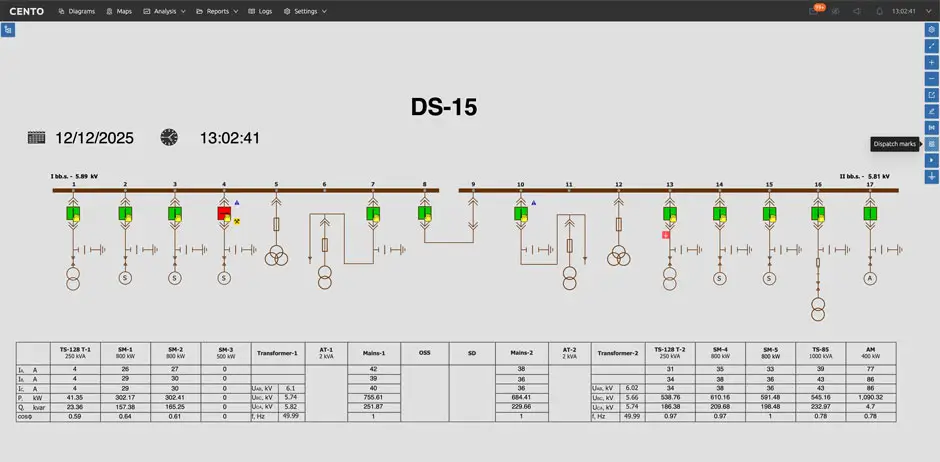
The first step is identifying machines with high energy use or unstable load profiles. These assets offer the fastest return when moving from simulation to a digital twin. After that, teams should connect basic sensor telemetry that captures temperature, vibration, load, and power data. Even simple inputs help the twin reflect real operating conditions. This creates a foundation for accurate insights that improve energy efficiency and operational stability across production lines.
Once the data stream is stable, the next step is building the first asset-level twin. This model should mirror one machine and compare simulated energy predictions with actual energy curves. When the twin proves reliable, manufacturers can scale it to a full line or plant. This step-by-step approach reduces risk, strengthens decision quality, and makes the shift from traditional simulation to real time digital intelligence more manageable for any manufacturing team.
A digital twin offers strong real time insight, but it still depends on data quality and system integration. If sensors are inaccurate or network latency is high, the model may not reflect true machine behavior. A twin also requires ongoing maintenance to stay aligned with changing equipment and production conditions. Manufacturers should expect a learning curve, especially during early setup. When these limits are understood, the twin becomes a reliable tool for improving energy efficiency and operational stability.
Simulation remains effective for planning, long term modeling, and early design work where assumptions are stable and real time insight is not required. It helps teams explore options, test ideas, and predict broad performance trends. A digital twin, however, supports real factory operations by using continuous data to reflect actual machine behavior, energy use, and process stability. When manufacturers need accurate insight, lower energy waste, and faster decisions, the digital twin becomes the more practical and reliable choice.
If your team wants clearer insight into energy use, process stability, or day to day decisions, a real time digital twin can provide the visibility you need. It helps manufacturers understand how machines behave, where waste appears, and which adjustments offer the strongest impact. Explore how a digital twin strengthens operational control and supports steady, efficient production across your factory.
A: No. A simulation uses static inputs and cannot update itself when conditions change. An enterprise digital twin uses real time sensor, SCADA, and MES data to mirror actual machine behavior. This makes a digital twin suitable for daily operational decisions, while simulation remains a planning tool.
A: Yes. An enterprise digital twin tracks live load profiles, torque, vibration, and cycle drift to expose hidden energy waste. It also identifies power spikes, unstable duty cycles, and inefficient process patterns. With these insights, manufacturers reduce energy intensity and improve overall line stability.
A: No. Most teams start with a single machine and basic telemetry such as temperature, vibration, and power data. From there, the enterprise digital twin can scale to a cell, a line, or a full plant as operational needs grow.
A: A digital twin reads machine states and alarms from SCADA, production context from MES, and priorities or resource plans from ERP. Together, these layers create a unified real time view that simulation cannot provide, supporting better scheduling, quality control, and energy decisions.
A: No. Adding sensors creates data, but it does not create synchronization or operational context. An enterprise digital twin also requires continuous updates, SCADA/MES/ERP integration, and alignment with real machine behavior. Without these layers, it remains a simulation model.
A: When energy costs fluctuate, machines show irregular cycles, or quality issues cause rework and extra power use. These conditions require real time accuracy that simulation cannot provide. A digital twin supports live monitoring, early anomaly detection, and energy optimization across production lines.
A: Yes. A digital twin captures actual energy use, idle patterns, cycle drift, and downtime to calculate accurate CO₂ output and resource efficiency. Simulation can only estimate these values, while a digital twin tracks them continuously.
A: Yes. Even without AI models, an enterprise digital twin provides real time visibility, anomaly detection, and energy-centric insights. AI simply enhances the value by predicting failures, suggesting settings, or optimizing schedules.
Share your details and let’s start the conversation.
Share your details and let’s start the conversation.
Explore CENTO in a live demo environment and see how the platform works in practice.
Login: demo
Password: demo
Want a closer look? Contact our team for a guided walkthrough.
Launch demo to discover some of product features.
Login: demo
Password: demo
If you need more information and guided demo – contact our team to book a call.