Why energy efficiency needs to be treated as an operational KPI
In many industrial organizations, energy is still managed as a cost line rather than an operational variable. It appears in monthly reports, utility bills, or sustainability dashboards, but rarely influences day-to-day decisions on the shop floor. This separation creates a gap where energy performance deteriorates without triggering immediate action.
When energy is not tracked at the same level as throughput, downtime, or quality, inefficiencies remain embedded in routine operations. Equipment continues running under suboptimal conditions, and consumption patterns drift away from production needs. Over time, this disconnect increases unit costs and reduces operational transparency.
Energy KPI: A measurable indicator that links energy consumption directly to operational performance, enabling it to be managed alongside production, reliability, and efficiency metrics.
Treating energy as an operational KPI shifts it from a passive metric to an active control parameter. It becomes something operators can influence in real time, rather than something managers review after the fact.

Where traditional energy tracking falls short
Most facilities already collect energy data, but the way it is used limits its value. Energy is often reported as total consumption over time, disconnected from production context. While this supports high-level reporting, it does not explain how operational behavior affects energy performance.
This creates a familiar pattern. A facility notices higher energy costs, but cannot determine whether the cause is increased production, equipment inefficiency, or process instability. Engineers are then required to manually correlate multiple data sources to identify potential explanations.
Because this process is time-consuming, it is rarely performed continuously. Short periods of inefficiency, such as unstable control loops or repeated load spikes, may never be investigated. As a result, energy performance becomes reactive rather than controlled.
Operational disconnect: A condition where energy consumption is measured but not directly linked to operational drivers, limiting the ability to manage efficiency in real time.
Without a clear link between energy and operations, teams optimize production and reliability independently, often overlooking how those decisions affect energy consumption.
How energy becomes an operational metric
To function as an operational KPI, energy must be measured relative to production and system behavior. Instead of tracking absolute consumption, organizations need to evaluate how much energy is required to produce a unit of output under specific operating conditions.
This requires combining energy data with operational signals such as equipment states, load profiles, and process conditions. When these data streams are aligned, energy performance can be evaluated continuously rather than retrospectively.
For example, a motor operating at low load may consume less total energy but operate less efficiently per unit of output. Similarly, auxiliary systems may maintain constant energy consumption even when production decreases, increasing overall energy intensity.
Energy intensity: The amount of energy required to produce a unit of output, used to evaluate efficiency relative to production rather than total consumption.
By framing energy in relation to production, it becomes possible to detect when systems operate inefficiently, even if total consumption appears stable.
How this differs from traditional efficiency programs
Conventional energy efficiency initiatives often rely on audits, equipment upgrades, or periodic optimization projects. While these approaches can deliver improvements, they are typically episodic and do not provide continuous control over energy performance.
Operational KPIs, in contrast, are designed for continuous monitoring and decision-making. They are embedded into daily workflows and used to guide operational adjustments in real time.
This difference changes how inefficiencies are managed. Instead of identifying issues after they impact costs, teams can detect deviations as they occur. Engineers no longer need to rely solely on historical reports to understand system behavior.
This shift reduces reliance on large-scale interventions and enables incremental improvements driven by operational insight.
What organizations gain by operationalizing energy
When energy becomes an operational KPI, its impact extends beyond cost reduction. Operators gain visibility into how their actions influence consumption. Engineers can identify inefficiencies earlier, before they affect reliability or performance. Managers gain a clearer understanding of how energy relates to production output and operational decisions.
This alignment reduces uncertainty. Instead of reacting to unexpected increases in energy costs, organizations can trace those increases back to specific operational conditions. Decision-making becomes more data-driven, and trade-offs between efficiency, throughput, and reliability become easier to evaluate.
Energy performance also becomes more consistent. Variability caused by unstable processes or inefficient system interactions can be identified and corrected, improving overall system stability.
How CENTO enables energy as an operational KPI
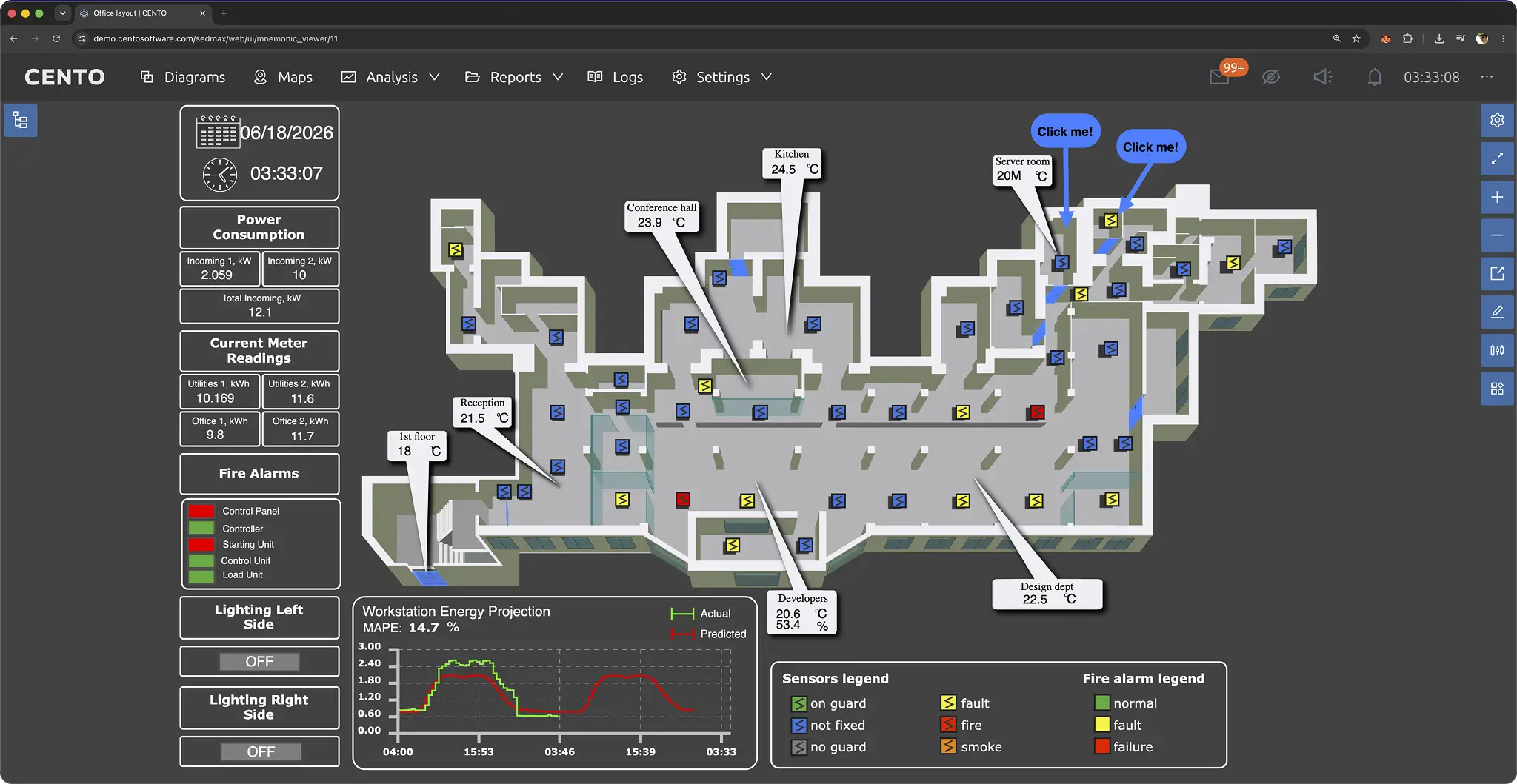
CENTO enables energy to function as an operational KPI by integrating energy data with real-time operational signals. Data from SCADA systems, sensors, PLCs, and historians is combined into a unified analytical environment where energy performance can be evaluated in context.
Instead of presenting energy as isolated metrics, the platform correlates consumption with equipment behavior, process conditions, and production activity. This allows engineers to identify how specific operational patterns influence energy efficiency.
For example, CENTO can detect when auxiliary systems continue operating despite reduced production demand, or when equipment operates outside its optimal load range. These insights allow teams to adjust operations rather than rely on post-event analysis.
By embedding energy into the same analytical framework as other operational metrics, CENTO ensures that energy performance becomes part of everyday decision-making.
Watch video about how CENTO works
Or read about what is CENTO and how it transforms enterprise operations into a unified digital twin, enabling energy consumption clarity, cost savings, sustainable growth and even more in our article.
Watch video about how CENTO works
Or read about what is CENTO and how it transforms enterprise operations into a unified digital twin, enabling energy consumption clarity, cost savings, sustainable growth and even more in our article.
How organizations typically implement Energy Efficiency KPI
Organizations typically begin by defining energy KPIs that align with their operational objectives. This often involves establishing energy intensity metrics for key processes or systems.
The next step is integrating energy and operational data sources. Existing infrastructure, such as SCADA systems and smart meters, usually provides the necessary data. Once integrated, baseline performance can be established, allowing deviations to be identified.
As teams become familiar with these metrics, energy KPIs are incorporated into operational dashboards and workflows. Operators and engineers begin using them alongside traditional KPIs such as throughput and downtime.
Over time, energy performance becomes a standard part of operational reviews and decision-making processes.
Integration with existing systems
Operationalizing energy does not require replacing existing systems. Instead, it depends on connecting and interpreting the data they already provide. SCADA systems deliver real-time signals, PLCs capture equipment states, and historians store long-term operational data.
CENTO integrates these data sources into a single analytical framework, enabling energy performance to be evaluated alongside production and system behavior. MES systems provide production context, while ERP systems translate energy performance into financial impact.
By aligning these systems, energy efficiency becomes measurable, actionable, and directly tied to operational outcomes. Instead of being managed separately, it becomes an integral part of how industrial systems are operated and optimized.
Clear next steps you can take with CENTO
If energy efficiency is becoming harder to manage with reports alone, the next step is to connect energy data with what is actually happening in production.
CENTO helps teams see where energy is being used, when consumption starts to drift, and which equipment or process conditions are driving the change.
- Learn how power quality affects efficiency and reliability
- See how real-time monitoring supports daily operations
- Explore how CENTO connects data from different systems
- See how digital twins help detect hidden inefficiencies
- Learn how cross-system integration works in practice
You can launch the demo to explore the interface yourself.
For a walkthrough, request a guided demo with the CENTO team.
Frequently asked questions
Q: What does it mean to treat energy efficiency as an operational KPI?
A: It means managing energy the same way as throughput, downtime, or quality. Instead of reviewing consumption after the fact, teams track how energy behaves during operations and use it to guide real-time decisions on equipment and processes.
Q: How is energy efficiency different from total energy consumption?
A: Total consumption shows how much energy is used overall, while energy efficiency shows how effectively that energy is used to produce output. A facility can consume less energy but still operate inefficiently if production drops or systems run under suboptimal conditions.
Q: What is energy intensity and why is it important?
A: Energy intensity measures how much energy is required to produce a unit of output. It helps teams understand efficiency in context, making it easier to detect when processes or equipment start consuming more energy than expected.
Q: Why do traditional energy reports fail to improve efficiency?
A: Most reports show aggregated consumption without linking it to operational conditions. This makes it difficult to understand what caused changes in energy use, so teams cannot act on the data quickly or consistently.
Q: How can industrial teams detect hidden energy losses?
A: Hidden losses become visible when energy data is combined with equipment states, load profiles, and process conditions. This allows teams to see when systems operate outside optimal ranges or consume energy without contributing to output.
Q: Do companies need new equipment to operationalize energy efficiency?
A: No. In most cases, existing SCADA systems, meters, and historians already provide the necessary data. The key step is integrating and analyzing that data together rather than replacing infrastructure.
Q: How does real-time monitoring improve energy efficiency?
A: Real-time monitoring allows teams to detect deviations as they happen. Instead of waiting for monthly reports, operators and engineers can respond immediately to inefficient conditions and adjust operations.
Q: How does CENTO help manage energy as an operational KPI?
A: CENTO connects energy data with operational signals from SCADA, PLCs, and other systems. It shows how equipment behavior and process conditions affect energy use, helping teams identify inefficiencies and take action during operations.