Using power quality events to reduce energy waste helps industrial teams find hidden losses that standard energy reports often miss. In industrial systems, power quality events are not just deviations recorded for later review. They are operational signals. Voltage sags, swells, interruptions, harmonics, imbalance, flicker, and frequency shifts can change equipment performance in real time. A disturbance matters when it disrupts operation, wastes energy, or interrupts the process. That is why power quality monitoring matters for more than compliance. For many industrial teams, using power quality events to reduce energy waste creates the missing link between electrical monitoring and operational efficiency. It helps teams see where electrical conditions begin to reduce useful work inside the process.
This also changes how teams interpret energy waste. It is not just a monthly kWh overrun. Plants can analyze it as a dynamic pattern tied to event timing, severity, and recovery behavior. Smart meters and event-aware systems can track active power, reactive power, power factor, THD, and frequency together. This helps engineers distinguish productive consumption from electrically degraded consumption. In practice, using power quality events to reduce energy waste helps teams connect electrical behavior with real operating losses. Managers then see more clearly where instability, hidden losses, and repeated recovery effort are increasing cost.
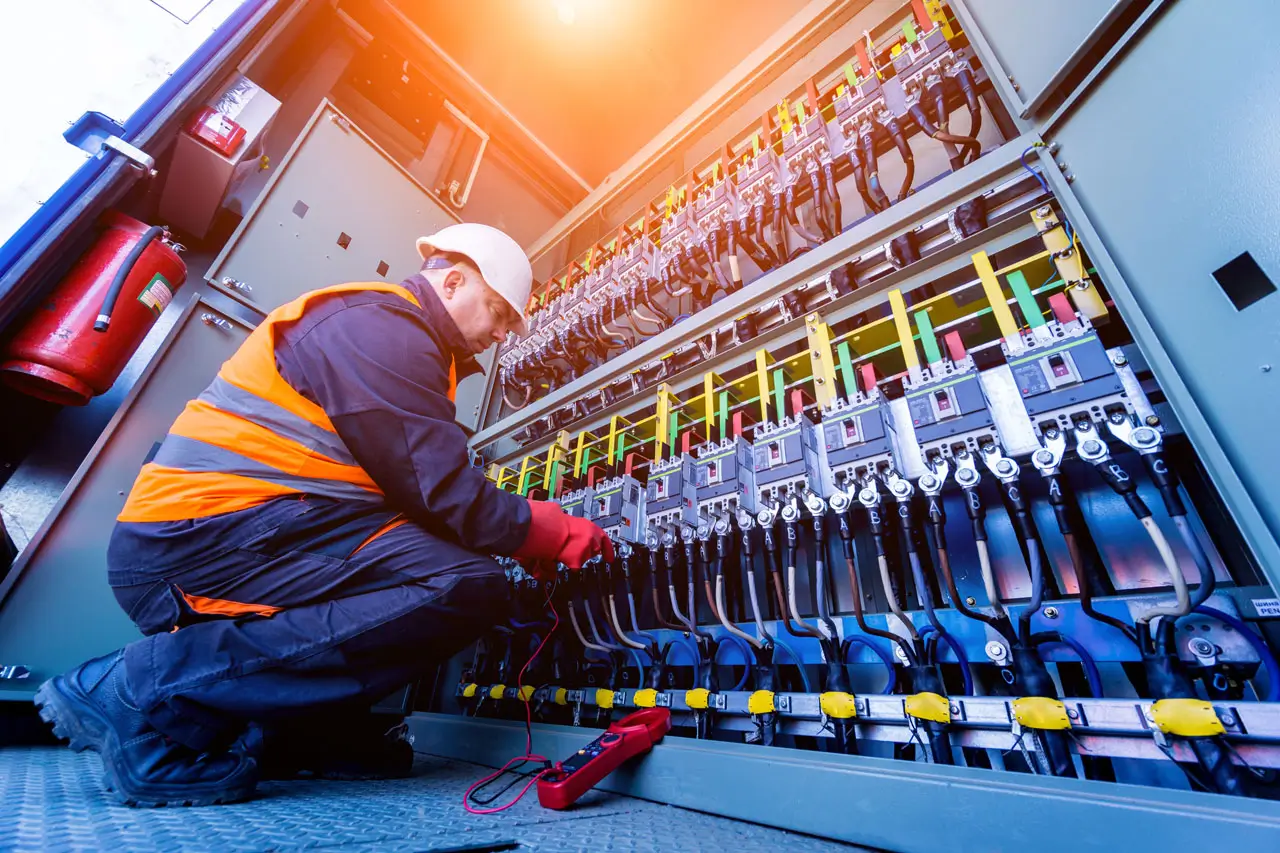
Why energy waste is often hidden inside poor electrical conditions
Poor power quality does more than stress equipment or shorten asset life. For plants focused on using power quality events to reduce energy waste, this is where hidden losses often begin to surface. It also creates hidden energy losses that standard energy views often miss. A plant may continue operating while motors run hotter. Torque falls. Vibration rises. Controls may recover poorly after a disturbance. The plant still uses electricity, but a larger share no longer produces stable, useful work. Poor power factor and excess reactive power make this worse because they increase losses without improving output.
This is where electrical engineering issues become plant performance issues. Harmonics, imbalance, sags, and related disturbances can lead to stalled cycles, rework, lower product quality, and non-productive recovery time. Even minor events can create those effects. If energy audits ignore power quality, they can understate waste and misread the root cause of inefficiency. Engineers need to connect electrical events with throughput, scrap, cycle stability, and asset stress, while managers need to see how degraded electrical conditions quietly increase operating cost.
How to use power quality events to reduce energy waste
Start with high-resolution, event-aware data capture
Event-driven efficiency starts with detailed electrical data capture. Any strategy for using power quality events to reduce energy waste depends on capturing disturbances with enough detail to support real analysis. The system must preserve what actually happened during a disturbance. If teams sample voltage and current too coarsely, the plant may keep the long-term trend but lose the event itself. That weakens the analysis. Engineers can see that performance changed, but not the electrical conditions that caused it. A useful architecture therefore separates continuous monitoring from event-aware capture, so trends and disturbances remain available together.
This usually means storing aggregated power quality parameters for trends while retaining raw waveform data for important events and using edge processing to handle part of the workload locally. Stream-oriented designs support that balance by separating event files, processed indicators, and retrospective analysis layers. Edge-assisted systems can also preprocess payloads, enrich time-series data, and support alarms locally. They do not need to send every raw sample upstream. A historian alone is not enough when event context disappears, because the plant then loses the fidelity needed for root-cause analysis.
Analyze energy and power quality variables together
Energy waste does not become visible when a plant looks only at total consumption. A rising kWh trend may reflect higher production, but it may also reflect poor power factor, excess reactive power, harmonic distortion, imbalance, or unstable operating conditions. The interpretation changes when teams analyze energy data together with power quality variables. That combined view helps teams see whether electricity is supporting stable output or being degraded by electrical conditions that add losses without adding value.
This is what moves monitoring into decision support. Smart meters and edge-enabled systems can capture active power, reactive power, power factor, THD, and frequency in real time. They can also compute additional analytics for dashboards and alarms. That allows engineers and managers to compare per-minute, daily, or weekly behavior and identify inefficient operating windows instead of only high-consumption hours. Good dashboards should show where energy volume remains high while energy quality becomes worse.
How to solve real plant challenges using power quality events
Separate avoidable energy waste from unavoidable process demand
High electricity use is not automatically a sign of waste. Some demand is necessary because the process may be producing, heating, moving, or transforming material as intended. The real problem starts when poor electrical conditions, unstable machine behavior, or disturbance-driven recovery periods increase consumption but do not increase useful output. Power quality events provide the evidence layer for separating those cases, because they show when energy demand rises under degraded operating conditions rather than during normal productive work.
This changes both analysis and management. When load states, event timing, and disturbance patterns are visible together, plants can compare baseline consumption with disturbed consumption. They can then identify when losses increase during abnormal operating windows. Teams stop treating every peak as a scheduling issue and start identifying electrical waste mechanisms directly. That also makes efficiency programs more defensible, because actions can be tied to measured disturbances, non-productive consumption, and unstable machine states instead of broad assumptions about total demand.
Reduce blind spots in maintenance and operational troubleshooting
Power quality events often fall into an ownership gap between operations, maintenance, and supply teams. Operators may see nuisance stops, maintenance may see overheating or repeated trips, and utility-related teams may focus on upstream conditions, yet none of those views alone explains the full chain. Event-based analysis closes that gap. It links electrical disturbances to specific assets, time windows, and operating states. That helps teams assign anomalies more clearly and address them before they grow into larger operational problems.
This matters especially for motors and drives because electrical quality affects operating status, reliability, and failure risk. If monitoring relies only on vibration or temperature, teams may detect symptoms while missing the electrical trigger behind them. Plants can strengthen predictive maintenance by connecting alarm occurrence, maintenance incidents, fault recurrence, availability, and asset condition to PQ signatures. This also improves troubleshooting. Cross-functional decisions become faster because the evidence is time-aligned, measurable, and shared across teams.
How to implement power quality event analysis in an industrial platform
Connect SCADA, MES, ERP, and historians based on operational context
Industrial integration often looks complete before it becomes useful. A platform may connect to SCADA, historians, PLC-driven data sources, or enterprise systems, yet still remain shallow if timestamps do not align, asset identity is inconsistent, or event records are detached from engineering context. That is why teams cannot treat integration as only a protocol issue. In practice, using power quality events to reduce energy waste requires context from SCADA, historians, and operational systems, not just meter data alone. Power quality events become operationally useful when the platform links runtime data to plant topology, component relationships, and event models. Upper-layer services can then interpret them consistently.
This matters because teams often see the cost of a disturbance outside the meter itself. That is one reason why using power quality events to reduce energy waste requires context from systems beyond the meter. SCADA can show the process response. MES can reveal downtime states or production disruption. ERP and maintenance records can expose recurring asset issues and business impact. Historians preserve the sequence over time. When those layers are joined properly, teams can evaluate electrical events against production orders, maintenance history, and recovery behavior instead of treating them as isolated anomalies.
Use a digital twin layer to test scenarios instead of only monitoring events
A digital twin becomes valuable when it does more than mirror current plant conditions. Monitoring can show that power quality events, instability, or reactive power shifts are happening, but it does not show what is likely to improve if the plant changes something. The digital twin layer connects those events with diagnosis, prediction, control logic, and possible reconfiguration options. That is what turns event data from passive visibility into a tool for evaluating better operating choices.
This matters because production behavior drives part of the energy waste, not just electrical measurements. A useful industrial energy twin can compare alternative settings and estimate how changes may affect energy use, cost, and process performance under real constraints. In a CENTO-like context, that means teams can measure what happened, explain why it happened, simulate what could change, and then apply the best option with less trial and error.
Watch video about how CENTO works
Or read about what is CENTO and how it transforms enterprise operations into a unified digital twin, enabling energy consumption clarity, cost savings, sustainable growth and even more in our article.
Watch video about how CENTO works
Or read about what is CENTO and how it transforms enterprise operations into a unified digital twin, enabling energy consumption clarity, cost savings, sustainable growth and even more in our article.
How to start using power quality events to reduce energy waste in industrial facilities
Focus first on the assets with the highest losses and the costliest event patterns
A practical rollout should start where power quality events are easiest to measure and most expensive to ignore. That usually means motor-heavy lines, sensitive electronics, unstable feeders, or areas with recurring downtime and recovery effort. The right starting point is not the part of the plant with the most available tags. It is the part where event frequency, energy share, and operational consequence intersect clearly. That helps teams validate value quickly and guide the next phase.
This is why prioritization should focus on relevant consumers, controllable parameters, and the cost profile of different disturbance patterns. Event classes do not carry equal business weight, and neither do assets. A phased rollout lets managers compare savings potential, failure recurrence, and disturbed operating hours before expanding coverage. That approach reduces risk, speeds validation, and creates a stronger basis for deciding where broader monitoring, analytics, or digital twin services should be added next.
Use operational KPIs to measure the impact of power quality events on energy waste
A power quality initiative should not be measured only by electrical indicators such as THD, power factor, or event counts. Those metrics are important, but they do not prove business value on their own. A plant needs to know whether fewer disturbances actually reduced waste, stabilized production, lowered scrap, or shortened recovery time. If success is defined only at the electrical layer, the project can become a monitoring exercise that generates data without changing decisions.
A stronger KPI framework combines electrical and operational outcomes in the same view. Useful measures can include kWh per good unit, disturbed hours, downtime minutes after events, maintenance cost, scrap, power factor, and harmonic exposure. Comparative dashboards then become more meaningful. They show whether electrical improvement translates into better plant performance. This also makes procurement and scale-up decisions easier, since managers can justify the next phase with measurable reductions in instability and inefficient operation.
Clear next steps you can take with CENTO
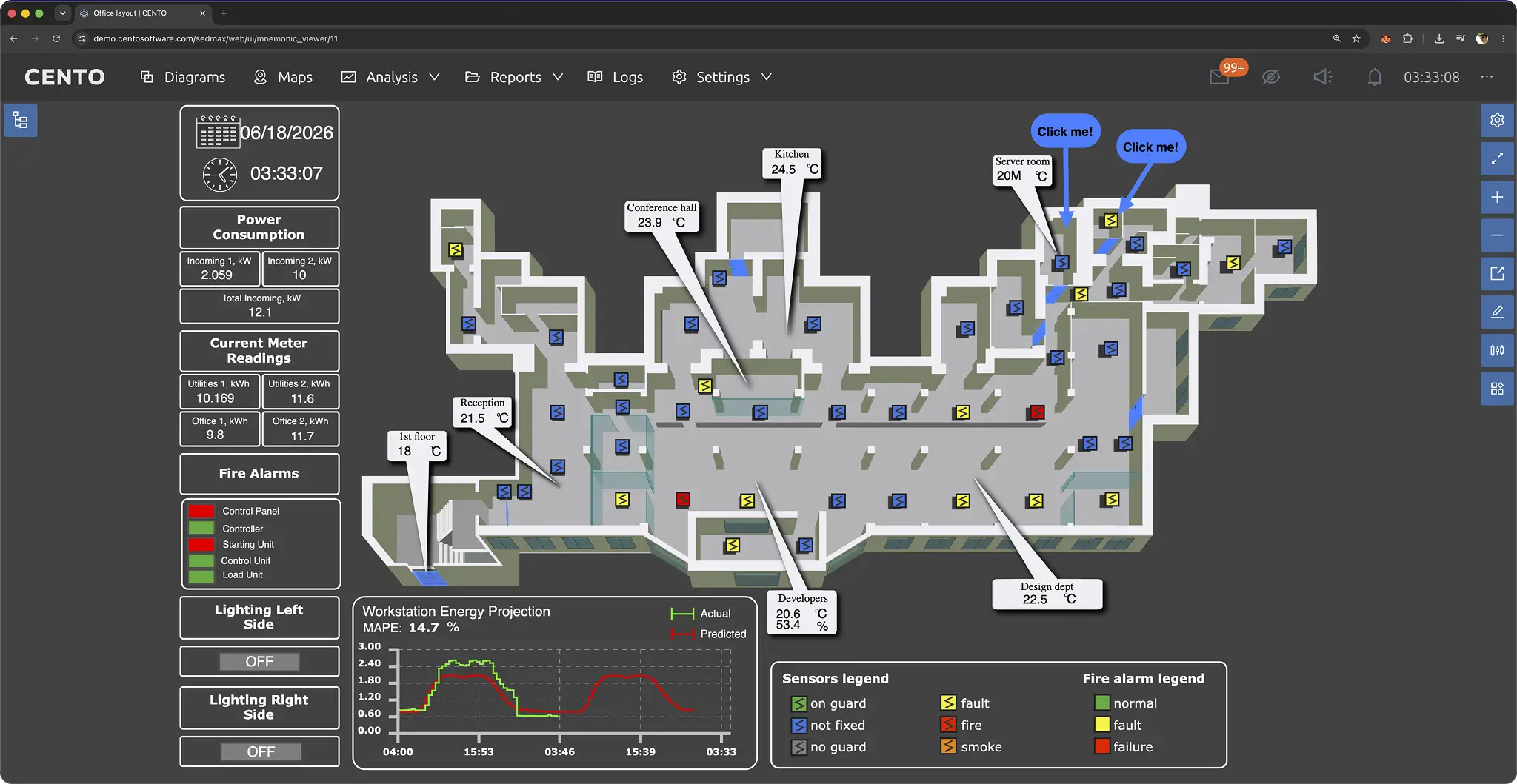
Start by bringing power quality events into the same environment as the rest of your operational data. CENTO connects event streams with metering, alarms, historian records, and cross-system signals, so electrical disturbances can be interpreted in context rather than treated as isolated incidents. See how CENTO supports cross-system integration and works as a unified industrial data platform.
Then review how those events relate to actual energy behavior. When power quality signals are aligned with real-time monitoring, digital twin logic, and existing operational systems, teams can see not only that an event occurred, but also how it affected loads, stability, and energy performance across the process. To explore the electrical side of this workflow, see power quality monitoring for industrial systems.
This is often where the biggest gap becomes visible. Many teams already monitor part of the picture, but still cannot explain instability, downtime, or unexplained energy drift quickly enough. CENTO helps close that gap by connecting what is already being tracked with the operational context needed to understand what the events actually mean.
Before moving further, you can explore the broader context around this workflow. Related topics include power quality events explained for industrial systems and digital twins, what CENTO is and how it works, and the full overview of CENTO product modules and industrial articles.
When you are ready to see how the workflow works in a live system, you can launch the CENTO demo or request a guided walkthrough by email at info@centosoftware.com.
A guided demo is especially useful when your team wants to evaluate how power quality events can support real operational decisions, not just electrical visibility. It helps compare what you already monitor against what still remains unclear during instability, downtime, or unexplained energy waste.