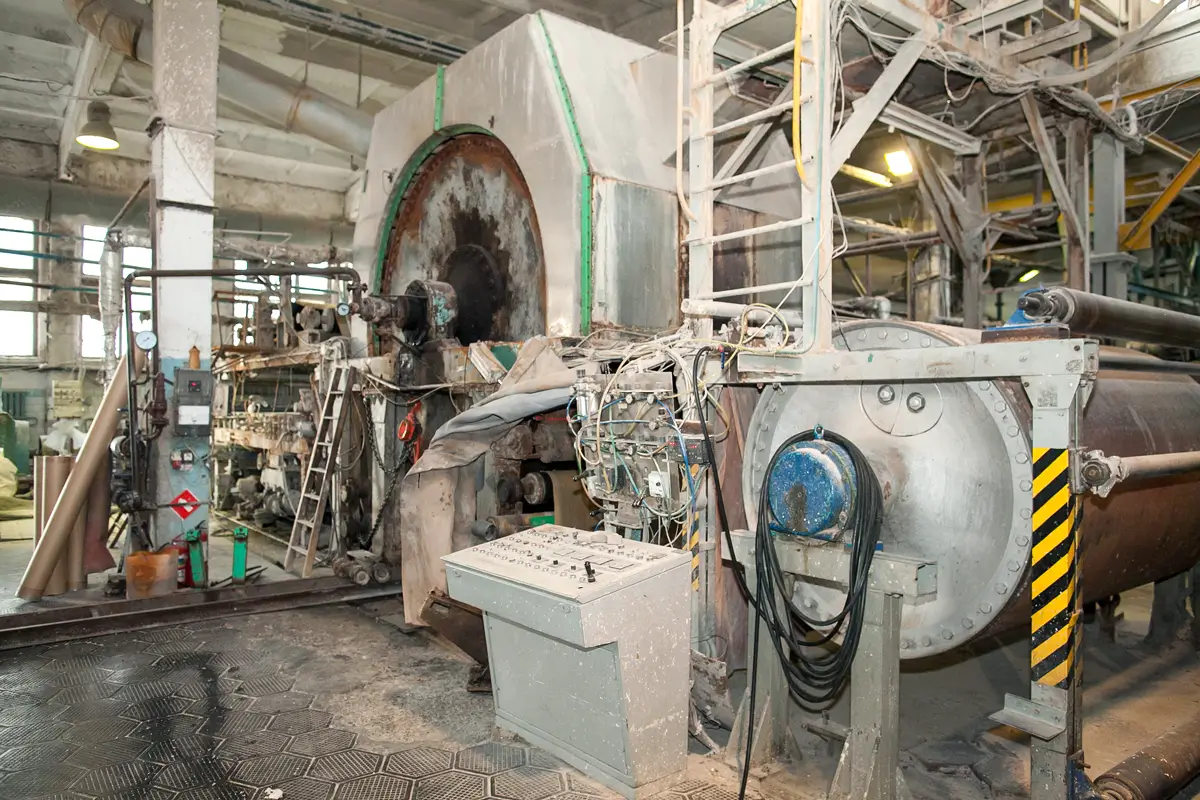
Industrial facilities rarely operate on entirely new infrastructure. Most plants rely on equipment installed over decades, often combining legacy systems with newer automation layers. While this equipment remains operational, its energy performance is rarely transparent. Consumption is distributed across motors, drives, pumps, and heating systems, making it difficult to understand where inefficiencies originate.
Legacy equipment is not inherently inefficient. The challenge lies in how it is operated and monitored. Many systems were designed for reliability, due to safety concerns, while not being optimized for energy performance under variable loads. As a result, equipment often runs at fixed speeds, oversized capacity, or suboptimal load ranges, consuming more energy than necessary.
Energy efficiency in this context can come not only from replacing existing infrastructure, but from understanding how existing systems behave under real operating conditions. While identifying where energy is consumed without contributing to production output.
Rethinking efficiency: replace vs optimize
The primary challenge with legacy equipment is not age, but lack of clarity in its operation and energy use. Many systems operate as black boxes, providing limited feedback beyond basic status signals. Energy consumption is measured at a high level, while the operational context behind that consumption remains unclear.
This creates several operational issues. Equipment may run continuously even when demand is low. Motors may operate far below optimal load, reducing efficiency while wearing components down. Auxiliary systems such as compressed air or cooling may compensate for process instability, consuming additional energy without being recognized or even considered as a problem.
Because these inefficiencies develop gradually, they are often accepted as normal operating conditions. Maintenance teams focus on reliability, while energy teams rely on aggregated reports that do not reveal root causes. The result is a steady accumulation of avoidable energy costs.
Operational blind spot: A condition where energy consumption is visible, but the operational drivers behind it are not, preventing accurate identification of inefficiencies.
Another common issue is the interaction between systems. Legacy equipment was rarely designed with system-wide optimization in mind. When multiple systems operate independently, their combined behavior can create inefficiencies that are not apparent at the individual equipment level.
How to improve energy efficiency without replacing equipment
Improving energy efficiency in legacy environments is often approached through equipment replacement or retrofit projects. While effective in some cases, these approaches require significant capital investment and may disrupt operations. More importantly, they do not always address how equipment is used.
An alternative approach focuses on operational efficiency. Instead of replacing equipment, it analyzes how existing systems behave under real conditions. This includes understanding load profiles, identifying periods of low utilization, and detecting patterns that lead to unnecessary energy consumption.
Traditional monitoring systems support this effort only partially. They provide data on energy use but lack the context required to interpret it. Engineers must manually combine data from SCADA systems, logs, and reports to understand full system behavior. This often leads to lengthy audits, while shorter periods of inefficiency may still go unnoticed.
Context-driven optimization: An approach to efficiency that focuses on how equipment operates within the broader system, using operational data to identify and correct inefficiencies without requiring hardware replacement.
Compared to hardware-centric strategies, this approach reduces dependency on capital expenditure and allows organizations to achieve efficiency gains through better coordination and control of existing assets.
How to align energy consumption with production demand in legacy systems
Energy efficiency in legacy environments is often overlooked because it is perceived as complex or capital intensive. In reality, many inefficiencies can be addressed without replacing equipment by focusing on how systems operate under real conditions.
Reducing unnecessary runtime, aligning equipment load with actual demand, and stabilizing system behavior lowers energy consumption while improving reliability. Equipment operates under less stress, maintenance demand decreases, and performance becomes more predictable.
Energy performance alignment ensures that equipment operates in line with production needs, eliminating unnecessary energy use across the system.
As a result, energy costs become more predictable and manageable, shifting from reactive tracking to operational control.
How CENTO enables efficiency for legacy equipment
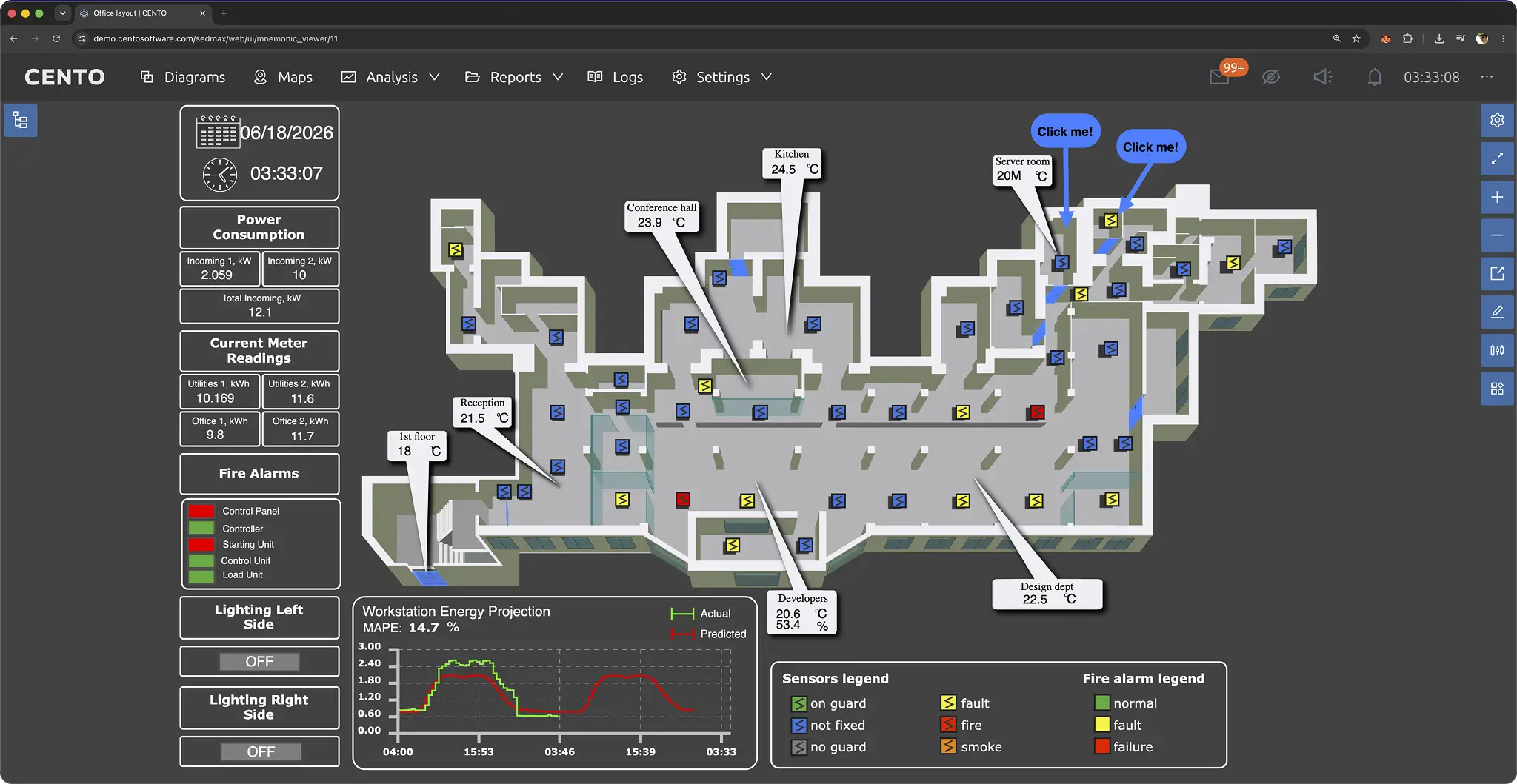
CENTO addresses legacy equipment efficiency by integrating existing data sources into a unified analytical environment. Rather than requiring new hardware, the platform connects to SCADA systems, sensors, PLCs, and historians to collect operational and energy data already available within the facility.
The system analyzes how equipment behaves under different operating conditions. It identifies patterns such as idle operation, load mismatch, and unstable system interactions. By correlating these patterns with energy consumption, engineers can pinpoint where inefficiencies originate.
Operational correlation: The process of linking equipment behavior with energy consumption to identify how specific operational conditions contribute to inefficiency.
This approach allows organizations to improve efficiency without replacing equipment. Instead, they adjust how systems are operated, coordinated, and controlled.
Watch video about how CENTO works
Or read about what is CENTO and how it transforms enterprise operations into a unified digital twin, enabling energy consumption clarity, cost savings, sustainable growth and even more in our article.
Watch video about how CENTO works
Or read about what is CENTO and how it transforms enterprise operations into a unified digital twin, enabling energy consumption clarity, cost savings, sustainable growth and even more in our article.
Where to start with legacy equipment energy optimization
Most organizations begin by establishing visibility into how energy is distributed across their existing systems. This involves integrating available telemetry and building a baseline of normal operating behavior.
Once a baseline is established, deviations become easier to identify. Engineers can detect when equipment operates outside expected conditions and investigate the causes. This reveals opportunities for optimization that were previously hidden.
Initial efforts typically focus on high-impact systems such as motors, compressed air, and heating. These areas offer the greatest potential for improvement because they account for a significant portion of energy consumption.
How to connect legacy equipment data for energy efficiency
Energy efficiency for legacy equipment depends on the ability to work with existing infrastructure rather than replacing it. SCADA systems provide real-time operational data, PLCs capture equipment states, and historians store long-term performance trends.
CENTO integrates these systems into a single analytical framework. This enables energy data to be interpreted alongside operational context, allowing inefficiencies to be understood at both equipment and system levels.
Production data from MES systems provides additional context, linking energy consumption to actual output. ERP systems translate these insights into financial impact, helping organizations prioritize efficiency initiatives.
By combining these data sources, legacy equipment can be managed with the same level of insight as modern systems. Energy efficiency becomes a function of operational intelligence rather than infrastructure replacement.
Clear next steps you can take with CENTO
If energy efficiency is still managed through monthly reports and fragmented data, the fastest way forward is to turn existing signals into operational insight. CENTO helps teams do that without replacing equipment or interrupting production.
Start by connecting the systems you already have. SCADA, PLCs, meters, and historians provide enough data to show how energy is used across the facility. CENTO unifies these sources into one environment where energy consumption is analyzed together with equipment behavior.
Once visibility is in place, build a baseline of normal operation. CENTO helps identify load profiles, idle runtime, and areas where energy use does not match production demand. These patterns show where optimization should start.
The next step is operational alignment. Use CENTO to adjust how equipment is scheduled, loaded, and coordinated across systems. This reduces unnecessary consumption, improves stability, and supports better reliability without major capital investment.
Explore the related CENTO capabilities:
- Control and monitoring with SCADA
- Digital twin cross-system integration
- Predictive maintenance with digital twins
Launch the demo or contact the CENTO team for a guided walkthrough.
Frequently asked questions
Q: Why is replacing equipment not always the best way to improve energy efficiency?
A: Because many inefficiencies come from how equipment is operated, not from the equipment itself. Replacing assets does not address issues like idle runtime, load mismatch, or unstable system behavior, which are often the main drivers of energy loss.
Q: What causes hidden energy losses in legacy industrial equipment?
A: Hidden losses are typically caused by equipment running outside optimal conditions, such as operating at partial load, running without demand, or compensating for process instability. These issues are rarely visible in aggregated energy data.
Q: How can energy efficiency be improved without replacing existing infrastructure?
A: By analyzing how systems behave under real operating conditions. This includes identifying idle periods, aligning equipment load with demand, and stabilizing interactions between systems to reduce unnecessary energy use.
Q: Why do traditional monitoring systems fail to identify inefficiencies?
A: Because they provide energy data without operational context. Engineers must manually combine data from different sources, which makes it difficult to detect short-term inefficiencies or understand their root causes.
Q: What is energy-performance alignment in industrial operations?
A: It is the process of matching equipment operation with actual production demand. This reduces unnecessary energy consumption and ensures that systems run only when and how they are needed.
Q: How does integrating SCADA, MES, and ERP systems improve energy efficiency?
A: Integration provides a unified view of operations, linking energy consumption with equipment behavior and production output. This allows teams to identify inefficiencies, understand their impact, and prioritize improvements based on both operational and financial factors.